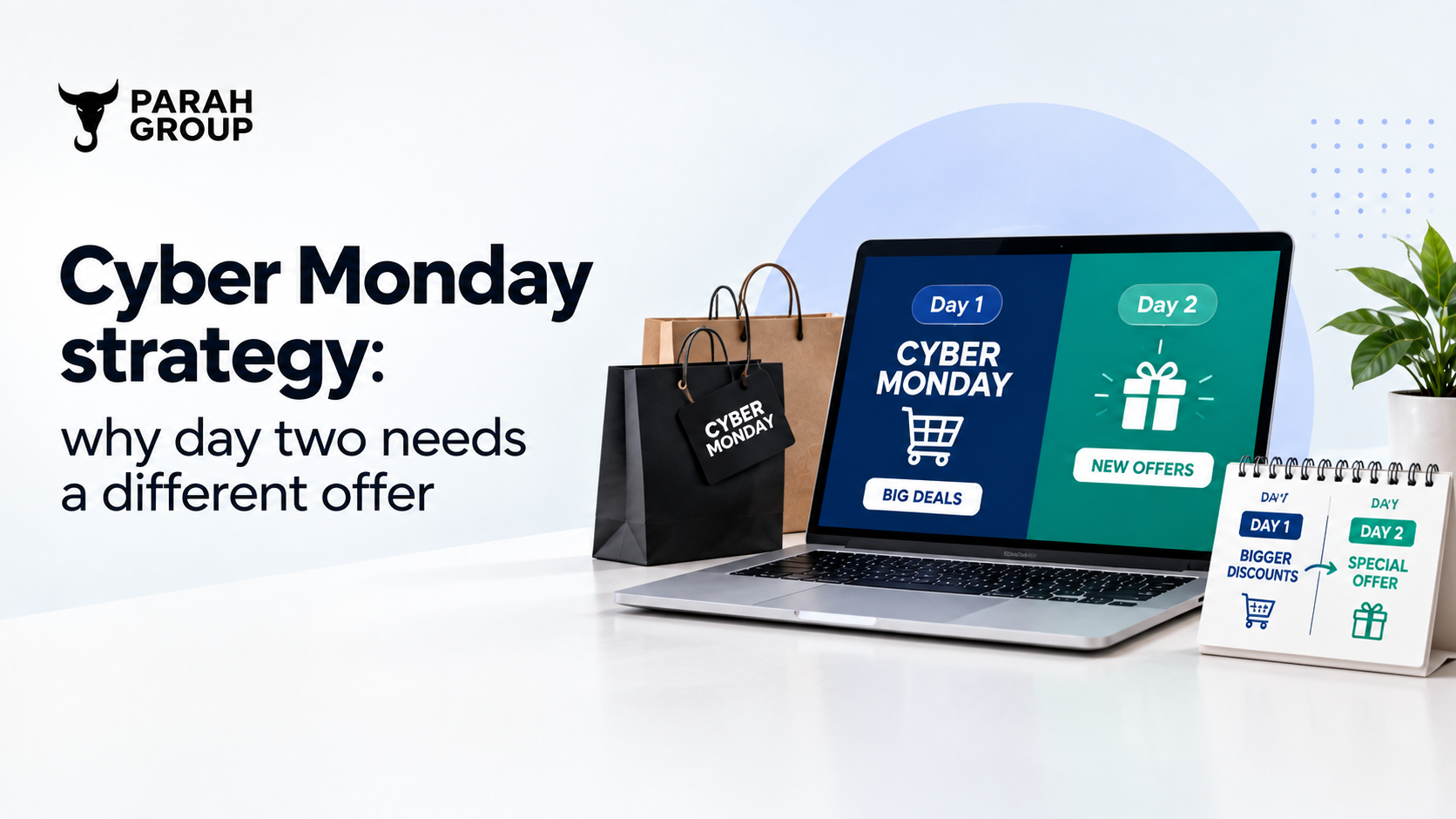
Cyber Monday reaches a different shopper than Black Friday: later, more deliberate, more likely to be buying for themselves and more likely to be comparing. Running the identical offer across both days treats them as one long weekend, which leaves the second day’s margin on the table.
Who is actually buying on the Monday
Two groups, and neither is the Friday shopper.
The first is the deliberate buyer who watched Friday, did not commit, and came back having thought about it. They are comparing rather than reacting, which means information beats urgency for them. Specifications, delivery dates, return terms and reviews do more work than a countdown.
The second is the self-gifter. Having bought presents on Friday, Monday is when people buy for themselves. That changes the product mix and it frequently changes the price point, usually upward.
Neither group responds to the same offer that worked on a reactive Friday afternoon.
What to change between the two days
| Element | Black Friday | Cyber Monday |
|---|---|---|
| Offer shape | Broad, simple, easy to grasp fast | Tiered or bundled, rewards a bigger basket |
| Messaging | Urgency and scale | Value, specifics, delivery certainty |
| Product emphasis | Gifting and bestsellers | Self-purchase, higher-consideration items |
| Page content | Offer front and centre | Offer plus comparison and reviews |
| Shipping message | Threshold and speed | Delivery date certainty |
| Post-purchase | Upsell | Subscription or replenishment offer |
The last row is the one most brands miss. A self-purchaser buying a consumable on Monday is the best subscription prospect of the entire year, and almost nobody makes that offer to them.
The subscription opportunity on day two
For any replenishable product this is the most valuable thing available on Cyber Monday, and it does not require discounting anything further.
Subscriber lifetime value runs between $350 and $800 against $168 for one-time buyers, and replenishment models carry the lowest churn in subscription commerce at 5% to 8% monthly.
Make the offer on the confirmation page rather than at checkout. It separates the purchase decision from the commitment decision and it cannot cost you the order, because payment has already completed. At a supplements brand we work with, subscription take rate moved from 25% to between 55 and 60% over six months, and the post-purchase surface was a significant part of that.
Do not simply extend the Friday discount
Running the same percentage across four days teaches your customers that the number was never urgent, which undermines every subsequent sale you run.
It also wastes the structural difference. A tiered offer on Monday, where a larger basket unlocks more, rewards exactly the behaviour the self-purchase audience is already inclined toward. Shopify’s average cart during BFCM 2025 was $114.70 against an $85 annual average, and Monday is where the upper end of that distribution tends to sit.
If you must run one continuous offer for operational reasons, at least change the messaging and the products you surface.
The operational reality of day two
By Monday your team is tired, your stock position has moved and your support queue is full. Whatever you plan for Cyber Monday has to be configured before Friday, because nobody is building anything new on the Sunday night.
That is the practical argument for a simple structural change rather than an elaborate one. A tiered threshold and a different hero message, both set up in advance, will outperform an ambitious plan that nobody has capacity to execute.
Check your stock position before the offer goes live. Promoting a product that sold out on Friday is the fastest way to convert goodwill into support tickets.
What to measure separately
Report the two days separately, always. Blending them hides which offer structure worked and guarantees you repeat the same plan next year without knowing whether it was the better one.
Track revenue per visitor, average order value and subscription take rate for each day independently. Average Black Friday conversion reaches 5.86% against an annual ecommerce average near 2.8%, and Monday typically behaves differently again, which is precisely the information a blended number destroys.
Frequently asked questions
Should Cyber Monday have a different offer to Black Friday?
Usually yes. The Monday shopper is more deliberate and more likely to be buying for themselves, which suits a tiered or bundled offer better than a flat reactive discount.
Is Cyber Monday still relevant for DTC brands?
Yes, and it is frequently the better margin day, because the audience is comparing rather than reacting and average basket sizes tend to run higher.
What is the biggest missed opportunity on Cyber Monday?
The subscription or replenishment offer to self-purchasers, made on the confirmation page where it cannot cost you the order.
When should the Cyber Monday offer be configured?
Before Black Friday. Nobody has the capacity to build something new on the Sunday night of peak weekend.
The pre-peak execution list is in our BFCM CRO checklist. The offer structure behind both days is what our CRO Program and ecommerce CRO work tests year-round.